35 years of technology. And counting.
Dialogicom is a software house founded in 2016, built on a technological journey that its founder began in 1991.
We have never simply followed industry trends. Instead, we address our clients' real-world problems by designing and building the custom tools needed to solve them.
Three projects worth a closer look.
Before SaaS and AI: a chat over an X.25 network and two FPGA boards, born from a project by our CEO Salvo De Luca. They are the foundation of what we do today.
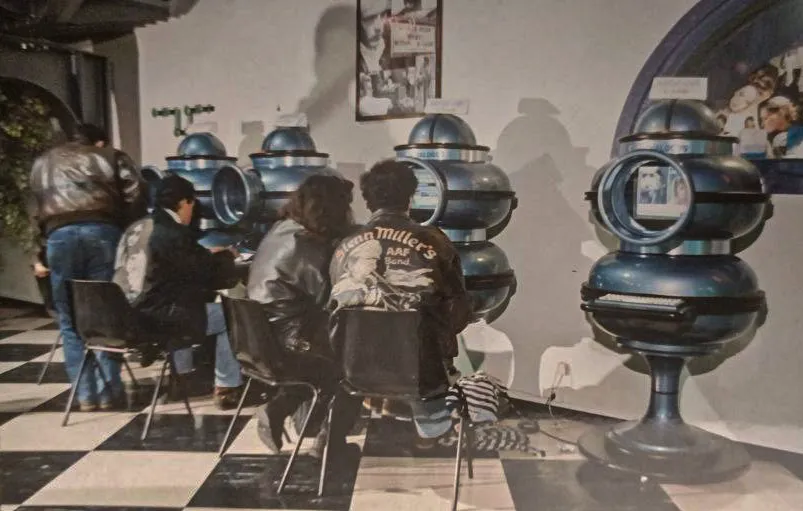 1991
Dialogos
Real-time chat before the Internet, from terminals in bars and arcades.
See the project →
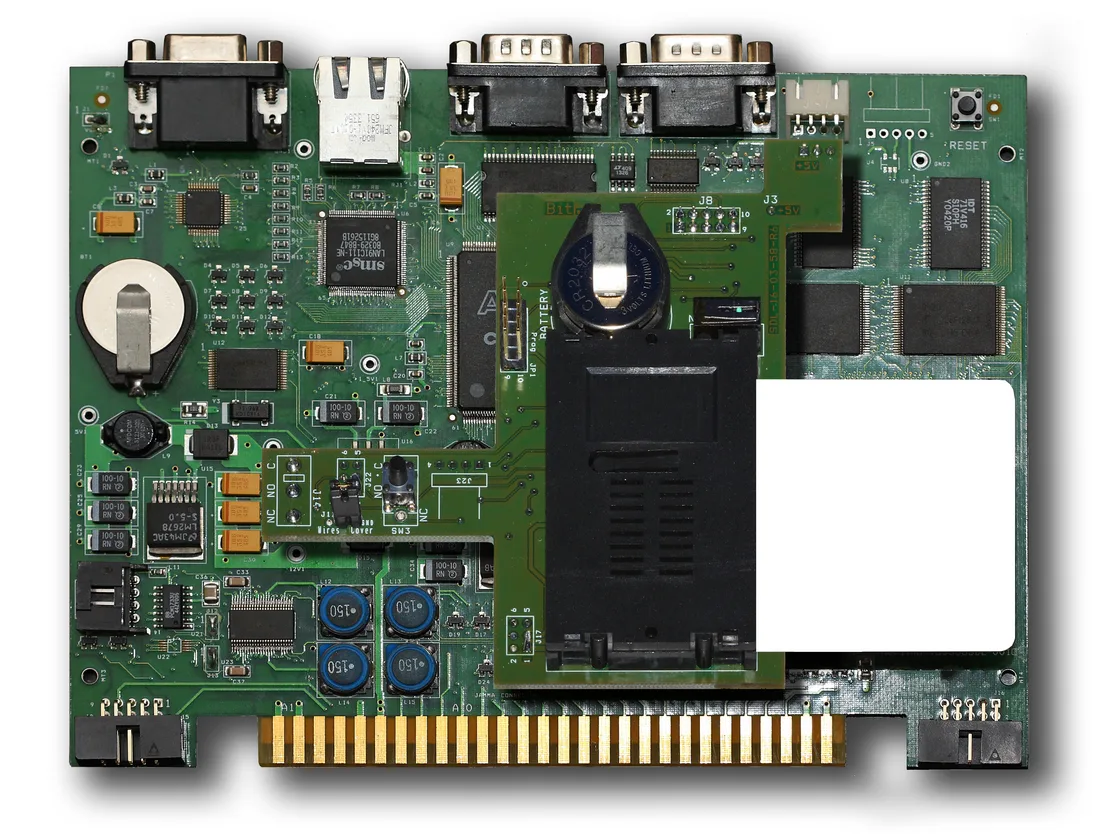 2005
Merlino Board
FPGA and smart card for regulated gaming: the board handled compliance.
See the project →
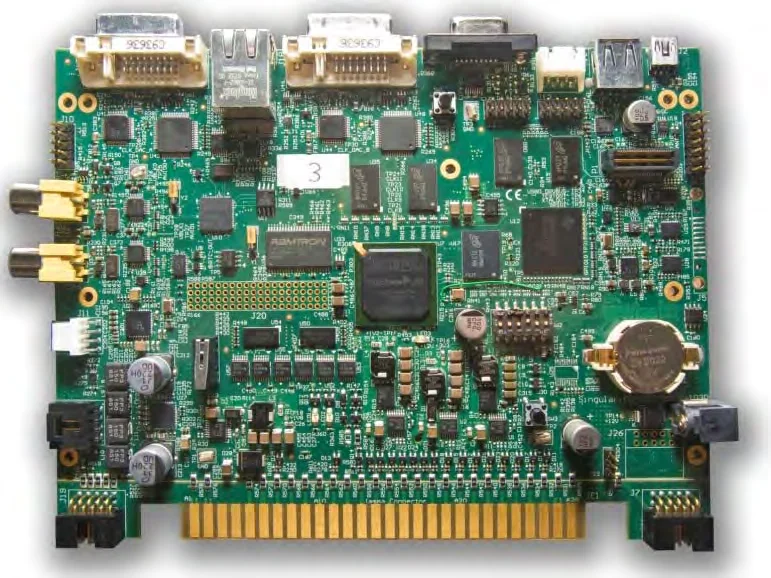 2009
Singularity Board
3D graphics on reprogrammable hardware: a true system-on-a-programmable-chip.
See the project →
Our projects, as others told them.
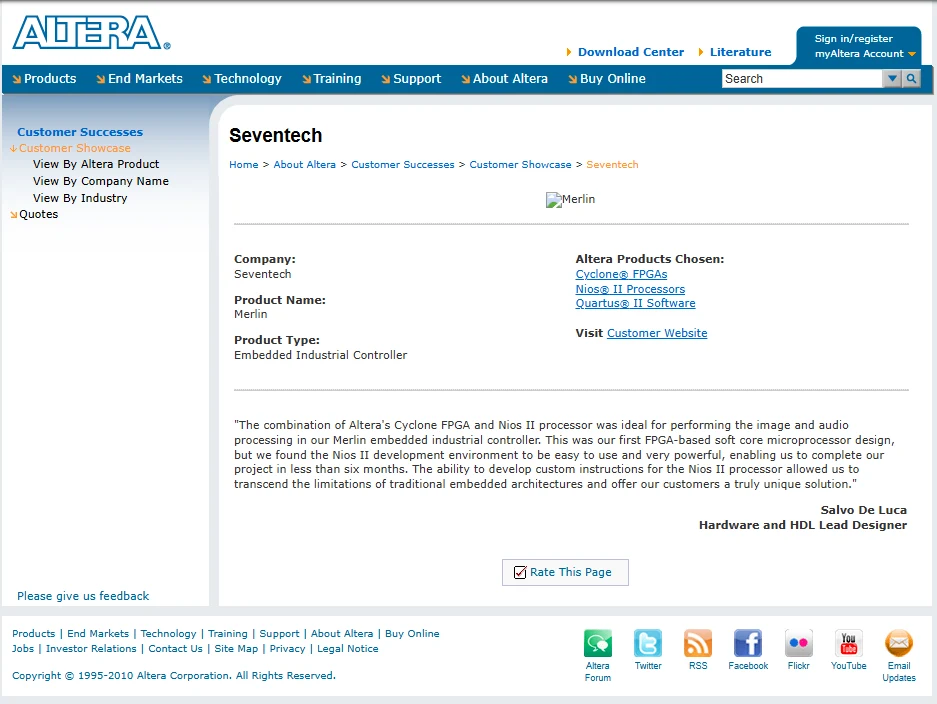 Altera (now Intel) · Customer Showcase
The Merlino Board, with Salvo De Luca credited as Hardware and HDL Lead Designer.
«The ability to develop custom instructions for the Nios II processor allowed us to transcend the limitations of traditional embedded architectures and offer our customers a truly unique solution.»
Read on the Merlino page →
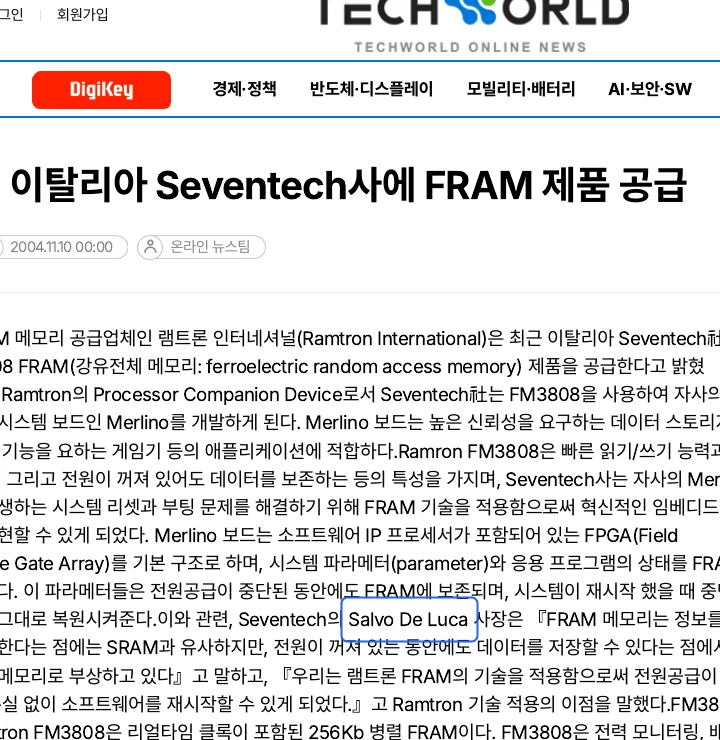 2004
Techworld (Korea)
The article on the supply of Ramtron FRAM for the Merlino Board: Salvo De Luca is cited in the text.
Read on the Merlino page →
2004
Ramtron International
Announces the supply of its FM3808 FRAM to Seventech for the Merlino Board.
Read on the Merlino page →
Trade shows
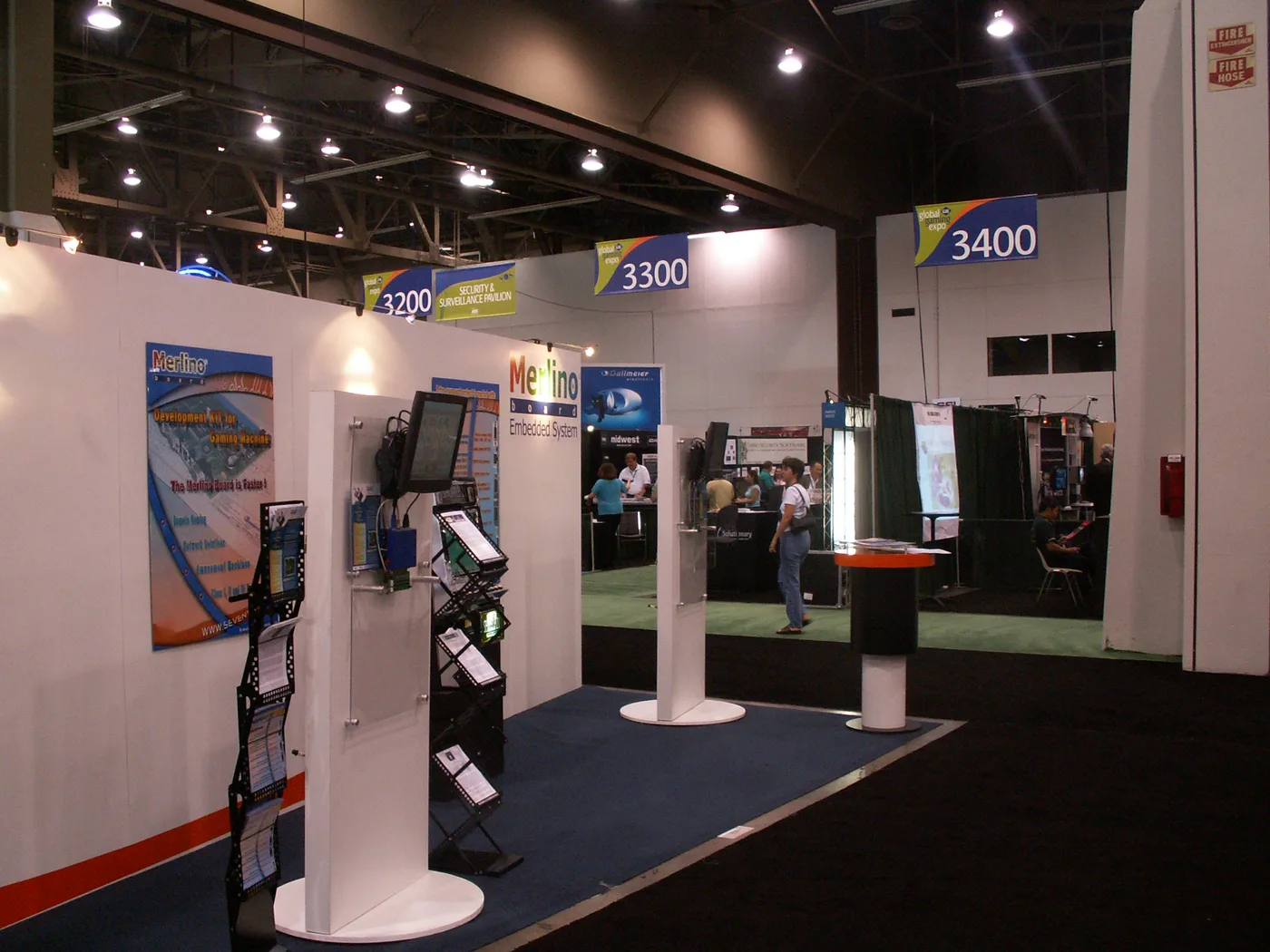
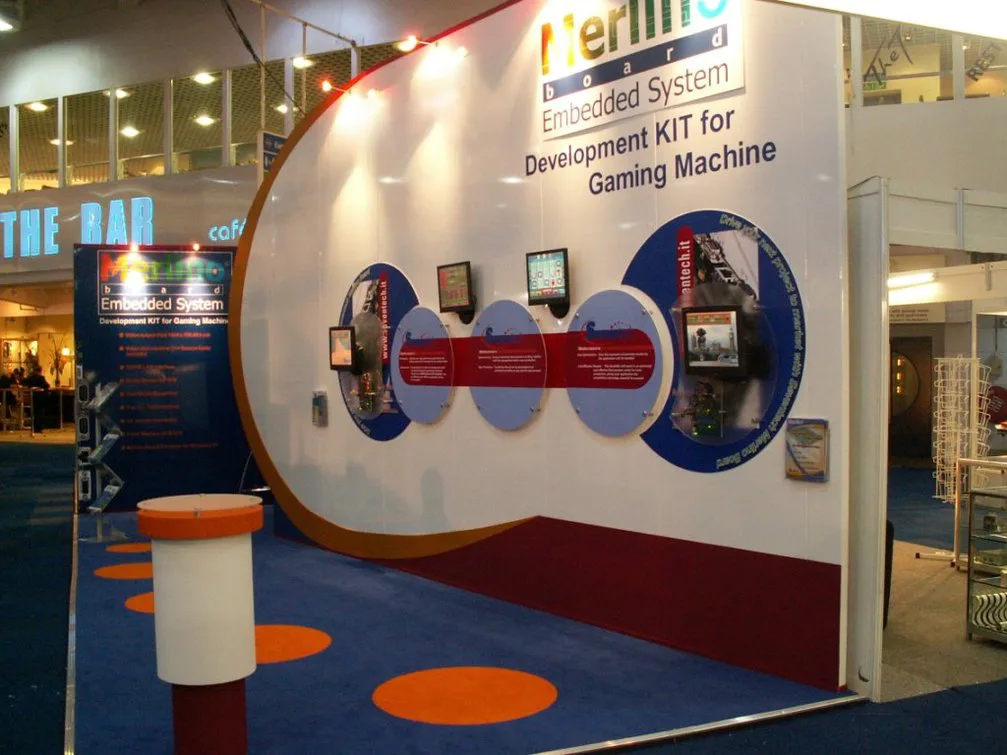

in technology for 35 years
Dialogicom is the culmination of that journey: a company built on 35 years of accumulated technical expertise, since 1991. Over time, in response to market shifts and evolving client needs, our capabilities have expanded from hardware to the web, and from expert systems to artificial intelligence.
This deep technical foundation spans embedded systems, electronics, custom software, web technologies and SaaS, with our current focus centred on modern AI integration.
Today, our primary focus is on SaaS development, AI integration and digital products built around each client's real-world processes. Embedded systems, however, remain a core part of our work, because that expertise underpins everything else we do.
Those who have designed hardware, where mistakes have real and sometimes costly consequences, tend to approach software systems with a deeper understanding of reliability, efficiency and the entire technology stack.
We turn innovation into practical tools for businesses. And when the solution our clients need does not yet exist, we build it.
64K of RAM. Enough for three.
Long before Dialogicom, and even before Dialogos, the founder designed and built his very first computer himself, around a Z80 processor. At first the operating system was CP/M by Digital Research (Pacific Grove, California); a few years later he also introduced MP/M, its multi-user version. Those were the years when the personal computer had not yet become a mass-market product and the IBM PC was still well in the future.
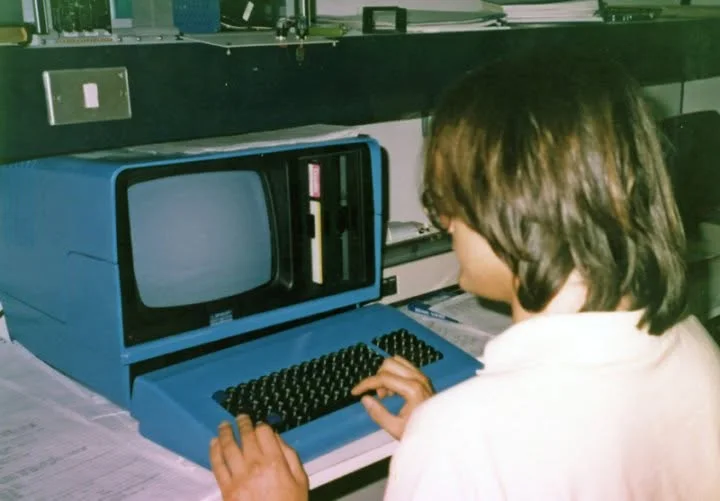
That system had 64 KB of RAM (yes, kilobytes) segmented into two 32K blocks: one for the program, the other for files and their handling. With the 5-inch floppy drive seen in the photo, you could instead allocate all 64K to the running program.
On that machine, with those “vast” resources, he wrote a complete warehouse and invoicing system, used concurrently from three terminals over RS232. Almost entirely in Z80 Assembler.
Some time later came a 5 MB hard disk: it cost 7 million lire at the time, a small fortune, as much as a city car. Formatting it alone took about an hour. And once you launched the compiler, there was time to go down to the bar for a coffee and come back before it had finished.
Shall we talk about what you can do today with 64K of RAM and 5 MB of disk?
A line that starts in 1991.
Dialogos
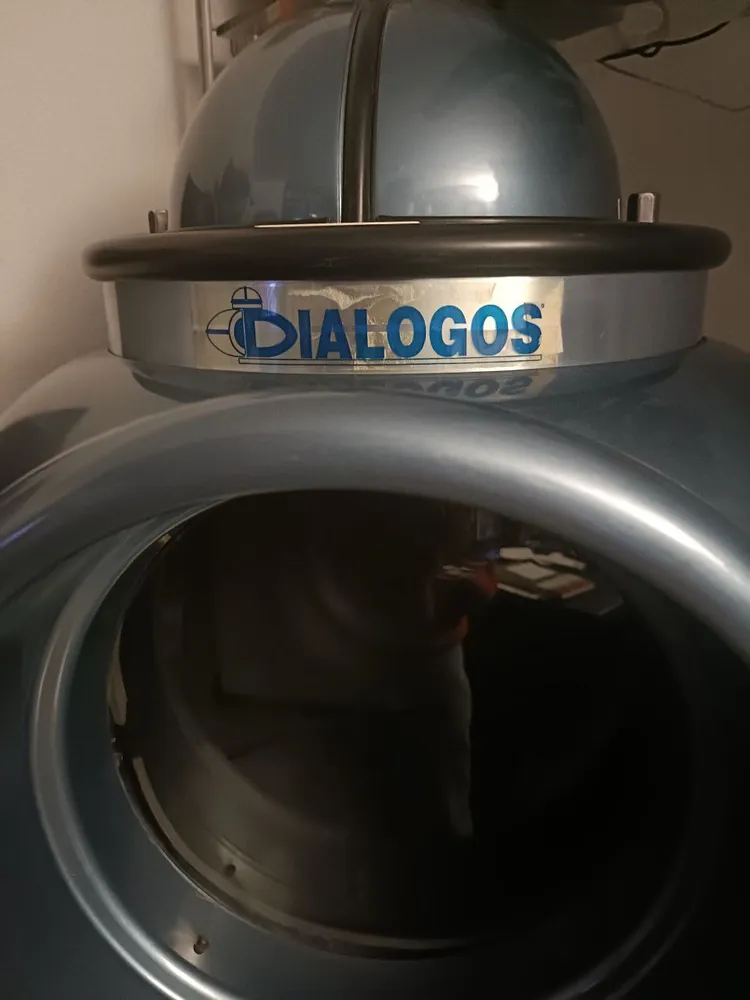
Hardware and software for the first real-time messaging system for public venues, over the X.25 Itapac network. Rechargeable smart card, porthole screen for privacy. Presented at ENADA 1991. To all intents and purposes, the grandfather of WhatsApp.
See the project: Dialogos →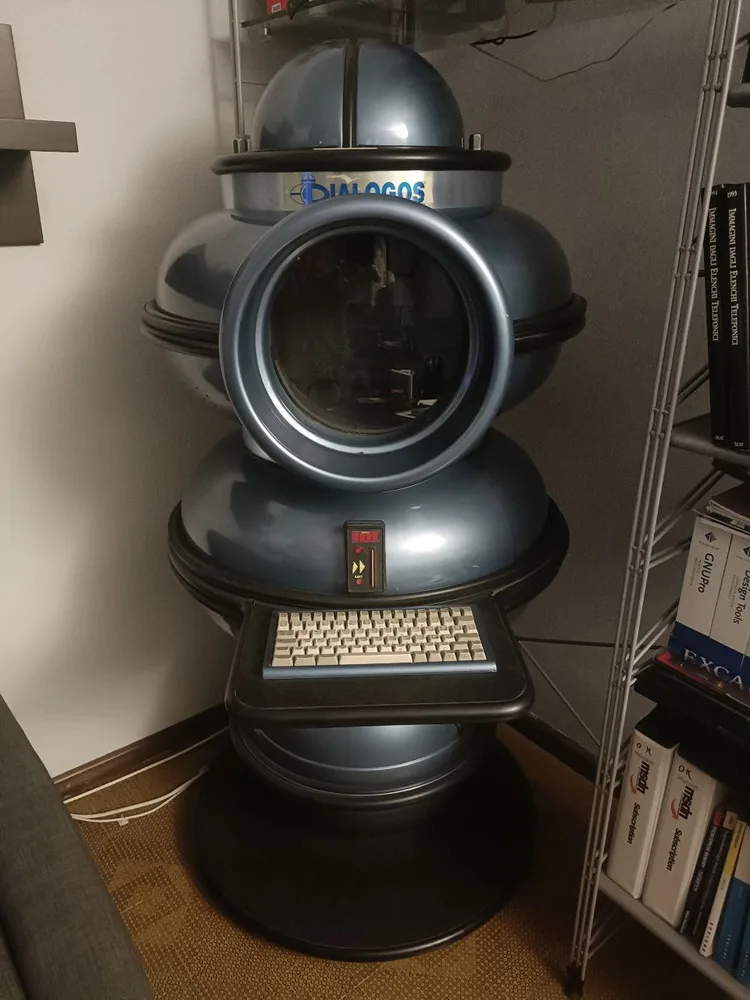
Merlino Board
An FPGA-based embedded system with a softcore processor. A development platform for regulated gaming machines, with smart card and gaming-authority compliance handled by the board: the developer was left with just the game.
See the project: Merlino Board →Singularity Board
Evolution of the Merlino Board: FPGA SoPC architecture, 3D graphics processor, dual smart card. More power, the same philosophy: hardware that reprograms itself in software.
See the project: Singularity Board →Electronics for fuel cells
With CNR, Italy's National Research Council, we develop electronics supporting fuel cells.
Expansion to the web
From embedded interfaces to websites, e-commerce and mobile apps. In response to clients who preferred a single technical partner, from device to cloud.
Dialogicom is founded
A new company, the same founder, the same approach: SaaS, e-commerce, portals, gaming, network security, industrial controls.
Expert systems and predictive analytics
AI techniques for sales forecasting and risk analysis, for food and spare-parts companies. Five years before ChatGPT arrived, when we called AI "expert systems".
From chip to cloud to generative artificial intelligence
SaaS application development, integration of AI models into business workflows, advanced embedded systems, web applications and smartphone apps, custom digital products.
Embedded is the root, not a memory.
We are not a web agency that bolted on a few technical services. We are the opposite: expertise born where a mistake has physical consequences, applied to the rest of the stack. That is the difference you feel when a product has to hold over time, not just at launch.
It is expertise that, over time, has even led us, in 2008, to work with the CNR, Italy's National Research Council, on the electronics supporting fuel cells.
It is the same rigour used to design a circuit that we bring into a SaaS application, an AI integration, a website. One software house, every layer of the stack.
Have a project in mind?
Tell us about it. We reply within 24 working hours, usually with a proposal for a thirty-minute call.